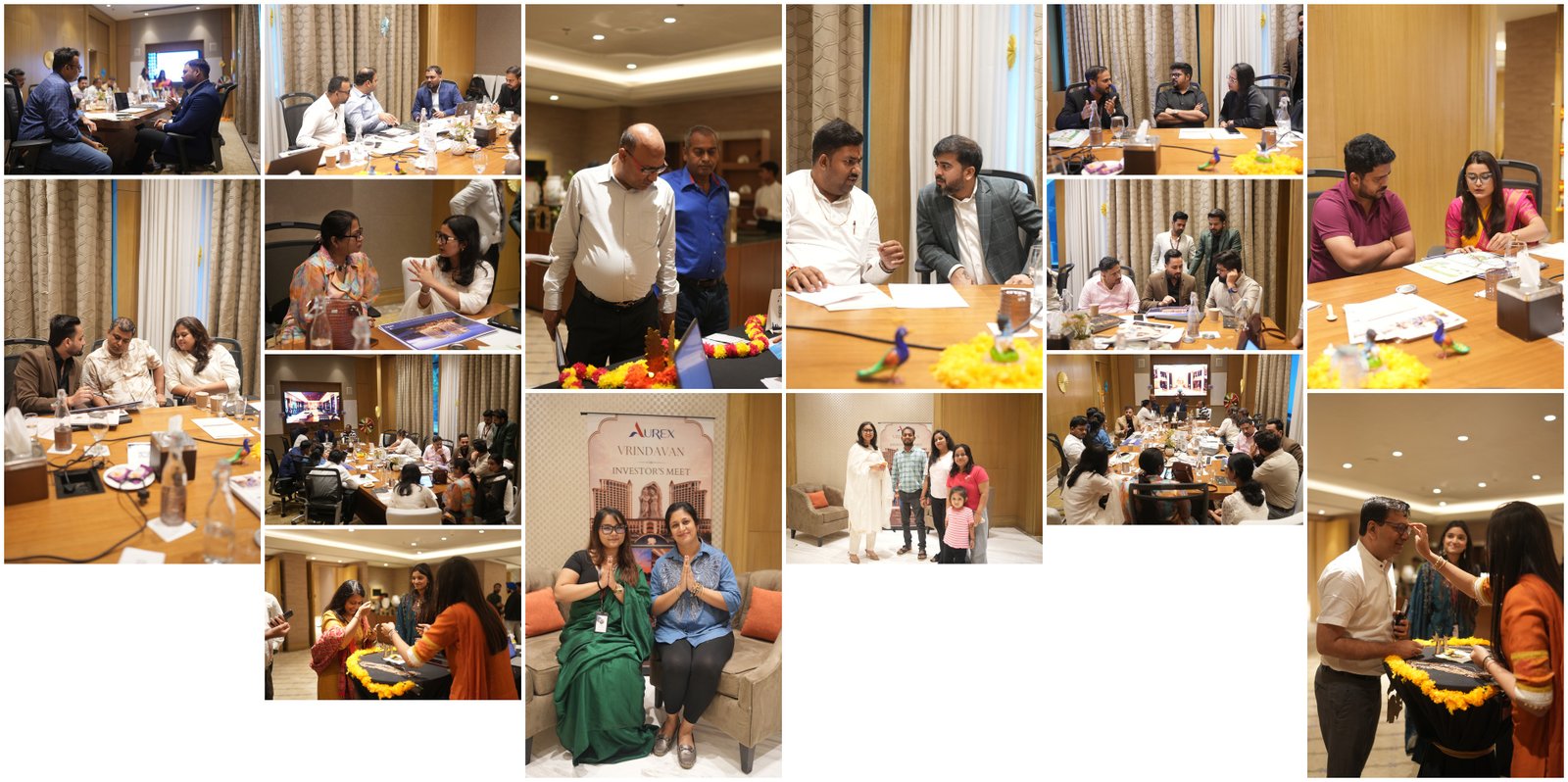
By the time people started leaving ITC Royal Bengal on the evening of 12 September, the venue staff were already resetting the room for the next booking. Nobody in the audience seemed to notice. Small groups were still standing around with printouts of the Dholera zoning maps, and one man was on the phone loudly enough that half the room could hear him, trying to convince his brother in Dubai to look at the Vrindavan numbers before he went to bed.
Twelve deals closed that night. The first meet, in August, closed five. The second closed seven. Nobody planned for the number to climb like this each time, but it has, and at this point it's worth asking why.
It stopped being a one-time thing after the second meet
The first event could have been a fluke a good crowd, a lucky night. The second made it look like something repeatable. The third has made it hard to call it anything but a pattern: same two projects, same city, same venue, and the numbers keep going up instead of settling into some average.
A few people in the room on the 12th had actually been to one of the earlier meets. One woman mentioned, almost in passing, that she'd come back with her sister-in-law this time because she'd bought into Vrindam in August and wanted her family to hear the same pitch. That's not something you can engineer with a good slide deck. That's word of mouth doing the selling before the presentation even starts.
Vrindavan: the same pitch, but the questions have changed
The Vrindavan session opened the way it usually does not with a floor plan, but with the team asking people what they actually think they're buying when they put money into a temple town. It's a good opener because it forces people to answer for themselves before anyone's tried to sell them anything.
What was different this time was how fast the room moved past that question. Earlier meets spent a while on "is this a good idea at all." This time, people jumped almost straight to specifics, which block gets you closest to the parikrama route, how possession is staged, whether four family members can split a purchase and hold it jointly. A couple of attendees clearly already knew the broad pitch going in and just wanted the details filled in.
The emotional case is still doing most of the work Janmashtami visits, a place to retire near the temples, something the kids inherit and actually want, rather than sell off. That hasn't changed and probably shouldn't. But it's noticeable that this audience needed less convincing on the "why" and more clarity on the "how."
Dholera: back to naming the infrastructure, not just gesturing at it
The Dholera segment this time did something the August 29 meet skipped over a bit, it named things. Not "growing interest in connectivity," but the Ahmedabad–Dholera Expressway, which is now actually open. Not "future airport potential," but the fact that civil work at Dholera International Airport is largely done. Not "industrial activity," but the Tata semiconductor plant, under construction, with production targeted somewhere in the 2026–2028 window.
That specificity mattered. A couple of attendees pushed back a little. One asked directly how the team could be sure the semiconductor timeline would hold, and got a straightforward answer: they couldn't be certain, and anyone buying into Dholera should verify the claims independently rather than take a presentation's word for it. That kind of answer, admitting the limits of what anyone can promise, seemed to land better than a more polished non-answer would have.
For the NRI attendees and there were more of them this time than in August. The legal side mattered as much as the infrastructure. FEMA restricts NRIs from buying agricultural land, so the NA (non-agricultural) conversion status on the plots on offer wasn't a small detail, it was the thing that made participation possible at all. A few people spent more time on that point than on the expressway.
The team kept repeating that this is a long hold seven to ten years, tied to when the industrial corridor actually starts running, not a quick flip. Nobody in the room seemed to expect otherwise. If anything, people who'd already looked at land in Gujarat before nodded along at that part; it matched what they already understood about how these regions develop.
What actually happens after the slides end
The formal part of the evening wraps up faster than the real conversations do. Once the presentations ended, the room broke apart into clusters, one around the Vrindam layouts, one around the Dholera maps and that's usually where the real decisions get made, not during the pitch itself.
A few people moved between both groups, clearly weighing one against the other. One family, from what I could follow of the conversation, seemed to be splitting the decision: the parents wanted Vrindavan, the son wanted Dholera, and by the end they'd apparently agreed to do both.
By the time people started leaving, the tally stood at twelve the biggest single-night number across the three meets, and the widest mix yet of first-time buyers and people who'd been through this before.
Why this keeps working
None of this is complicated, honestly. Vrindavan gives people a reason that has nothing to do with returns, faith, family, a place that means something. Dholera gives people a reason that's entirely about returns, infrastructure, timing, getting in before a region is fully priced. Most rooms full of investors have some of each type, and putting both pitches in front of them in one evening means almost everyone finds something worth saying yes to.
The other thing that seems to matter, more than anything in a slide deck, is that the team keeps being straight about what they don't know how long Dholera will actually take, what could go wrong, why independent verification matters. That's probably a bigger reason the numbers keep climbing than any single line in the pitch.
What's next
For the twelve people who signed on the 12th, it's the usual next steps site visits and block picks for Vrindavan, paperwork and legal checks for Dholera. For everyone else, the number itself is the story: five, then seven, then twelve. At some point that stops looking like momentum and starts looking like a track record. Whatever the fourth meet ends up doing, it'll have that history to live up to.
51 Views