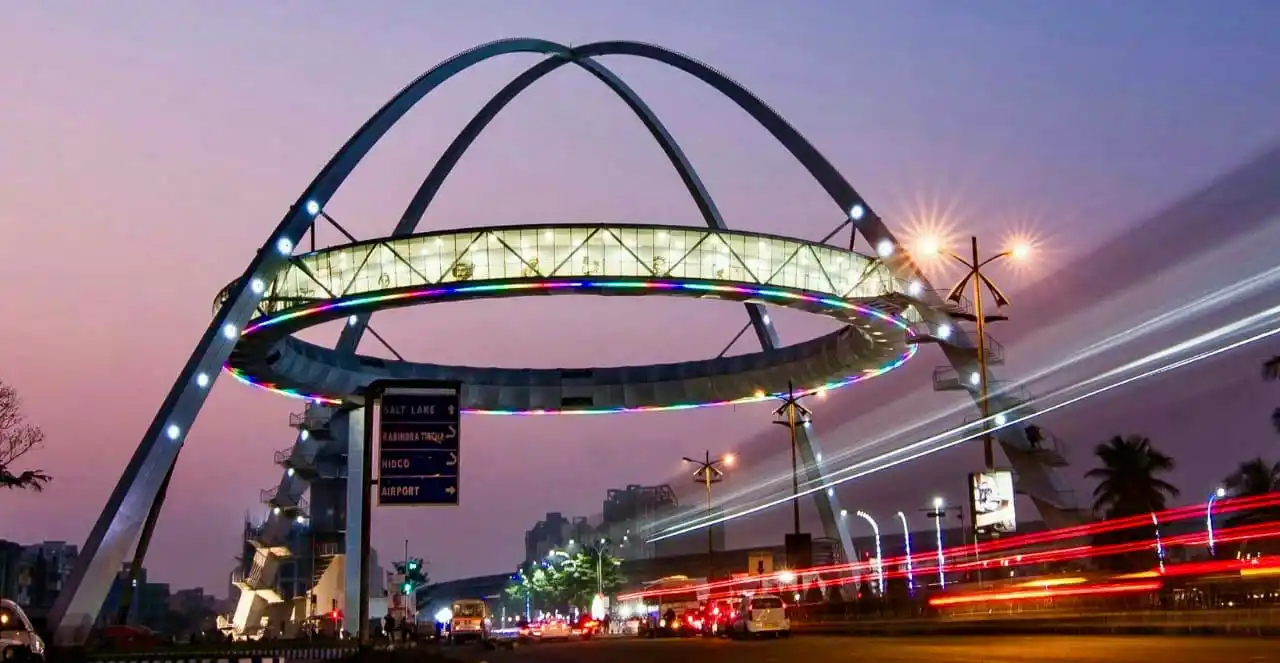
Kolkata investors have always looked beyond the city from Noida and Greater Noida to Goa and Dubai. The mindset is consistent: find the story, validate the numbers, then commit.
In 2026, one of the most compelling stories is not in a new IT corridor or a coastal township. It’s in Vrindavan where faith, infrastructure, and tourism economics are converging to create a very specific kind of real estate opportunity.
This guide is for Kolkata buyers and investors evaluating Vrindavan real estate investment in 2026. We’ll cover footfall, infrastructure, micro-markets, rental logic, objections, competitor positioning, and finally, where a project like Anand Majestic fits into this story.
Why Vrindavan, Why Now?
Vrindavan’s investment story rests on three pillars: footfall, infrastructure, and returns.
Footfall that looks like a business model
Vrindavan runs on a 365-day pilgrim economy:
-
Regular footfall: 50,000–1,00,000 pilgrims/day across Mathura–Vrindavan–Braj.
-
Janmashtami 2025: around 60 lakh devotees in a single day.
-
Adhik Maas 2026: 6.5 crore devotees visited Mathura–Braj in the month.
-
Uttar Pradesh recorded 156 crore devotees in 2025, with Braj highlighted as a model of religious tourism.
This is not “seasonal tourism”. This is continuous demand for stays, food, transport, and services.
Returns that show up in spreadsheets
Market data from 2023–2026 shows:
-
Property values in the Mathura–Vrindavan corridor appreciating at up to 33–35% CAGR in plotted developments.
-
Some hot micro-markets reporting 75–80% returns in 1 year.
-
Published rental yields of 6–9% gross, rising to ~12% in peak seasons for well-managed assets near temples.
For investors tired of slow-growth metro assets, this combination of appreciation + yield is hard to ignore.
An ₹7,000+ crore infrastructure push
Vrindavan in 2026 is backed by a multi-project infrastructure pipeline:
-
Vrindavan Bypass (6-lane, access-controlled): ₹1,645.72 crore to decongest the core city.
-
84 Kosi Parikrama Marg → National Highway: ₹5,000 crore upgrade of the Braj circuit.
-
Mathura–Vrindavan master plan: ₹30,000 crore vision; MVDA’s 2026–27 budget alone is ₹2,082.84 crore.
-
Banke Bihari Corridor: ₹262 – ₹600 crore, approved in 2025, already impacting land prices in a 1–3 km radius.
-
Heritage City at Raya (Yamuna Expressway node): ₹500+ crore core project; broader estimates up to ₹6,922–12,000 crore.
-
Civic & ghats revamp: ₹400 crore for riverfront/ghats; ₹500 crore for smart-city style civic infrastructure.
-
Tourist facilitation: ₹45 crore for Tourist Facilitation Centres in Govardhan and Kokilavan.
When ₹7,000+ crore of public money goes into a 20–30 km radius, land doesn’t stay at 2019 prices.
Tourism: Rental Engine
Vrindavan’s visitor economy is the backbone of the rental story:
-
Pilgrims stay 1–4 nights on average; families and groups often book entire apartments or villas.
-
There is no off-season: Janmashtami, Holi, Annakut, Govardhan Puja, Chaurasi Kos Parikrama, and weekend pilgrimages keep demand steady.
-
Well-managed assets near temples report 6.5–7.5% regular yields, touching 12% in peak periods.
-
Short-stay data for Vrindavan shows around 27.9% occupancy, ₹34/night ADR, and ₹154/month revenue per listing on average.
For investors, the pitch is simple: a second home that can pay for itself through pilgrim rentals, while you use it for festivals and family trips.
Key Locations: Picking Your Vrindavan Bracket
“Vrindavan” is not one price. It’s multiple micro-markets with different risk-return profiles.
Radha Kund Road / Radha Kund
-
High spiritual pull; close to key temples and parikrama routes.
-
Plots: average around ₹9,600/sq.ft; range ₹2,244–22,413/sq.ft.
-
Best for: faith-driven buyers, land-banking, strong sentiment.
Raman Reti
-
Established residential + spiritual zone; mix of old homes and new projects.
-
Example: 3 BHK independent house at ₹95 lakh, ~2250 sq.ft → ₹4,220/sq.ft; plots commonly ₹70 lakh – ₹3 crore.
-
Best for: liveable second home + rental option.
Chhatikara Road / Chhatikara
-
Emerging residential corridor with new projects.
-
Plots: average around ₹3,112/sq.ft; range ₹311–11,104/sq.ft.
-
Best for: entry to mid-budget investors; growth corridor play.
Ramtal Kund & surrounding belts
-
Dense residential pockets with many apartment projects; 570+ flats listed in Ramtal Kund alone.
-
Flats in Vrindavan overall average ₹9,676/sq.ft, range ₹267–18,230/sq.ft.
-
Best for: rental apartments for pilgrims and small families.
Raya Urban Node / Heritage City axis (Yamuna Expressway side)
-
Long-term township play; new development zone linked to Yamuna Expressway.
-
Unplanned/outskirts plots: ₹6,000–28,000/sq.yard; established colonies: ₹28,000 – ₹62,000/sq.yard; premium gated townships: ₹60,000 –₹1,00,000+/sq.yard.
-
Best for: 7–10 year horizon, township story.
The key is to match budget, hold period, and use-case to the right micro-market.
Connectivity: Kolkata ↔ Vrindavan in Real Terms
For out-of-city investors, the practical question is: Will I actually use this?
Air + road (fastest)
-
Kolkata → Delhi: ~2 hours flight.
-
Delhi → Vrindavan: ~3 hours by road via NH and Yamuna Expressway link.
-
Total door-to-door: 6–7 hours including airport time.
Train option
-
Direct trains: Kolkata → Mathura Junction in 18–22 hours.
-
From Mathura to Vrindavan: short local commute.
For NCR-based investors
-
Vrindavan is a long weekend drive via Yamuna Expressway and the new 7.278 km four-lane link road (98% complete by early 2026).
This makes Vrindavan feasible as a festival home + rental asset, not just a “someday” second home.
What a Serious Vrindavan Project Must Offer
In a market full of brochures, serious investors should look for:
-
RERA + MVDA clarity: Registered project, clear title, instant registry, visible approvals.
-
Location logic: Distance to key temples, bypass, parikrama routes, and Heritage City axis.
-
Product mix: Plots + villas + apartments to choose between land banking, second home, or rental asset.
-
Amenities that support stayability: Security, power backup, water management, clubhouse, meditation/yoga zones, temple/prayer room.
-
Rental readiness: Option for managed rentals, clear maintenance model, bank financing partners.
-
Developer credibility: Delivered sq.ft., transparent documentation, third-party ratings (if applicable).
If a project can’t show RERA and MVDA approval clearly, it shouldn’t have your money.
10 Objections Smart Investors Raise
-
“Is Vrindavan just emotional, not financial?”
Footfall (60 lakh on Janmashtami, 6.5 crore in Adhik Maas) + yields (6.5–12%) + appreciation (33–35% CAGR) say otherwise. -
“What if the Banke Bihari corridor or other projects get delayed?”
You’re not betting on one road. Bypass, parikrama NH, Heritage City, MVDA budget multiple sanctioned projects reduce single-project risk. -
“RERA and title risk?”
Stick to RERA-registered, MVDA-approved projects with bank financing. Verify RERA numbers online; avoid “cash only” deals. -
“Will rentals really work?”
365-day pilgrim flow, festival spikes, and published yields of 6.5–12% in managed products support the rental thesis. -
“Is appreciation real or brochure math?”
33–35% CAGR in plotted corridors, 75–80% returns in some hot micro-markets, 15.11% appreciation in 2025 alone. -
“Connectivity from my city is long.”
2-hour flight + 3-hour drive; direct trains to Mathura; weekend feasibility for NCR-based buyers. -
“What about resale liquidity?”
National pilgrim buyer base + NCR spillover + RERA transparency improves secondary market comfort vs unauthorized plots. -
“Water, power, maintenance will it work?”
New RERA townships include underground electricity, STP, rainwater harvesting, structured maintenance. Verify project-level infra and maintenance scope. -
“Isn’t Ayodhya or Dwarka better?”
Ayodhya is more event-driven; Dwarka is a long-term play. Vrindavan offers 365-day demand, deeper RERA inventory, and better NCR/Kolkata connectivity today. -
“What if I never use it personally?”
Position it as an income asset first, second home second. Rental management can handle occupancy while you benefit from appreciation + yield.
Vrindavan vs Ayodhya vs Dwarka: The Investor’s View
All three are “temple town” stories, but they play out differently:
-
Vrindavan: 365-day pilgrim flow; 6.5–12% yields; multiple RERA projects; 2h flight + 3h drive from Kolkata.
-
Ayodhya: Event-driven spikes; emerging rentals; newer inventory.
-
Dwarka: Long-term pilgrimage hub; limited RERA depth; better for West India buyers.
For Kolkata and NCR investors, Vrindavan in 2026 is the most balanced combination of faith + footfall + documented yields + connectivity.
Where Anand Majestic Fits Into This Story
All of this footfall, infrastructure, micro-markets, rental logic is the macro story of Vrindavan in 2026.
Anand Majestic is how you plug into that story at a project level.
About Anand Majestic
-
Developer: Braj Bhoomi Group
-
Location: Sunrakh Road, Vrindavan
-
Product: Residential plotted development
-
Land: Part of a 16-acre planned gated township
-
Status: Ready-to-move plots with MVDA approval and RERA registration
-
Configuration: Plots in various sizes, designed for custom homes, second homes, or long-term land banking
Why This Project Stands Out
-
Location advantage: Close to Banke Bihari Temple, ISKCON, Prem Mandir, and key parikrama routes; easy access to Mathura Junction and Yamuna Expressway.
-
Planned township living: Wide internal roads, secure perimeters, cycling tracks, parks, community spaces, and dedicated parking zones.
-
Spiritual + modern blend: A gated community that balances Vrindavan’s spiritual essence with modern amenities and infrastructure.
-
Investment logic: Vrindavan’s property values are witnessing steady appreciation due to spiritual tourism, second-home demand, and retirement migration. Anand Majestic offers a legally safe, ready-to-move plot in this growth path.
Who Should Consider Anand Majestic?
-
Investors who want a RERA + MVDA approved plotted asset in Vrindavan’s growth corridor.
-
Families looking for a second home they can customize, while benefiting from township amenities.
-
Buyers planning a retirement or weekend home in a spiritually rich, yet rapidly developing real estate hub.
Final Thought: Faith + Footfall + Infra: Smart Allocation
Vrindavan in 2026 is not just about devotion. It’s about devotion backed by data: 6.5 crore devotees, ₹7,000+ crore infrastructure, and double-digit appreciation in well-chosen micro-markets.
For Kolkata investors and other out-of-city buyers, the opportunity is clear: understand the macro story, pick the right micro-market, insist on RERA + MVDA clarity, and hold for 5–10 years.
Projects like Anand Majestic are how you turn that macro thesis into a concrete, plot-level investment in Vrindavan’s future.
If you’d like a detailed project brief, master plan, and price sheet for Anand Majestic, reach out and we’ll share the full dossier.
114 Views